
Jos tarvitset alennusta tai apua, ota meihin yhteyttä chatin tai lehdistön kautta. KONTAKTA OSS
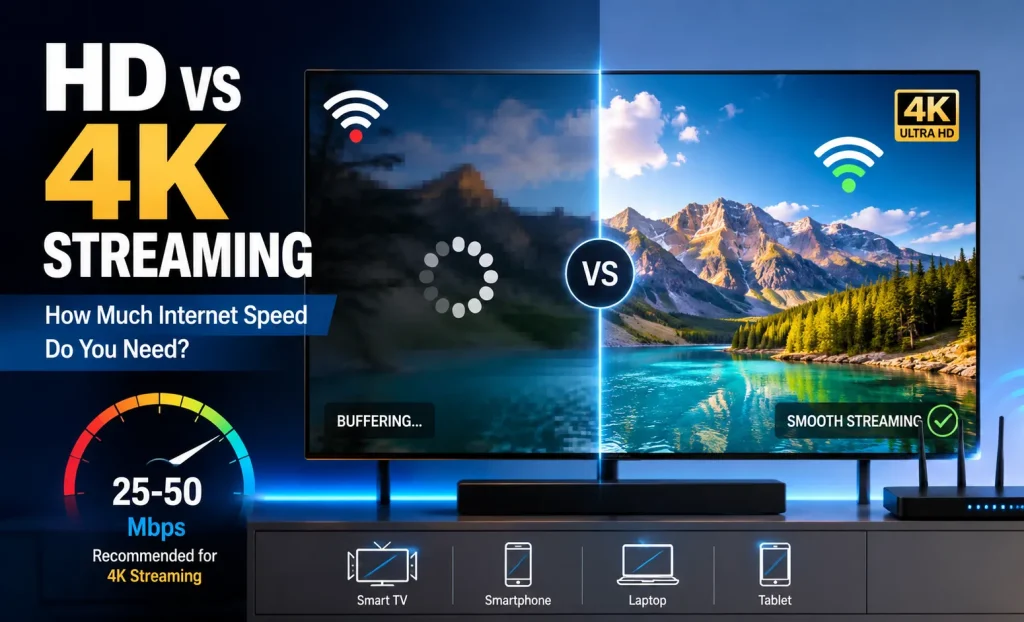
Streaming has become the primary way people watch movies, TV shows, live sports, and digital entertainment. However, many viewers experience buffering, lag, poor video quality, and interrupted playback without understanding the real cause.
In most cases, the problem is not the streaming platform itself but the internet connection behind it.
Understanding internet speed requirements for HD and 4K streaming can help you optimize your home network, improve video quality, and enjoy a smoother viewing experience across all your devices.
In this guide, we’ll explain how internet speed affects streaming performance, how much bandwidth different video resolutions require, and what you can do to improve streaming quality in 2026.
Streaming services continuously deliver video data from remote servers to your device. The higher the video quality, the more data must be transferred every second.
When your internet connection cannot keep up with the required data rate, you may experience:
A stable connection is just as important as raw speed.
Bandwidth refers to the amount of data your internet connection can transfer per second.
Streaming platforms automatically adjust video quality based on available bandwidth. If your connection slows down, the platform may reduce resolution to maintain uninterrupted playback.
Common streaming resolutions include:
Each resolution requires different amounts of bandwidth.
SD content typically requires:
While SD remains usable on smaller screens, most viewers now prefer higher resolutions.
HD streaming generally requires:
This quality level provides a noticeable improvement in image sharpness and detail compared to SD content.
For Full HD streaming, experts typically recommend:
This resolution remains one of the most popular choices for everyday viewing.
4K content requires significantly more bandwidth because it contains four times as many pixels as Full HD.
Recommended speeds:
For households with multiple users, higher speeds are often necessary.
Although still emerging, 8K content may require:
As display technology evolves, internet infrastructure must keep pace with increasing bandwidth demands.
One common mistake is assuming streaming speed requirements apply to only one device.
Modern households often have:
If multiple people are streaming simultaneously, total bandwidth requirements increase significantly.
A family may be using:
Total bandwidth needed:
This demonstrates why many homes benefit from internet plans offering 100 Mbps or more.
When discussing streaming, most attention focuses on download speed.
Download speed affects:
Upload speed becomes important for:
For typical viewers, download speed remains the most critical factor.
Even a fast internet package cannot guarantee perfect streaming.
Several factors influence real-world performance.
Weak Wi-Fi signals can reduce available bandwidth significantly.
Common causes include:
Many households continue using outdated routers that struggle to support modern streaming demands.
A newer router often delivers:
Internet speeds may decrease during peak usage hours when many users share network resources simultaneously.
This can affect streaming quality even if your subscribed speed appears sufficient.
Older streaming devices and Smart TVs may struggle with:
Keeping devices updated can improve performance significantly.
Modern streaming platforms rely on advanced video compression technologies.
Compression reduces file sizes while maintaining visual quality.
Popular video codecs include:
One of the most widely used compression standards worldwide.
Benefits include:
Designed for higher resolutions.
Advantages include:
A newer codec gaining popularity across the streaming industry.
Benefits include:
Advanced codecs allow viewers to enjoy better video quality without requiring dramatically faster internet connections.
Before upgrading your internet plan, perform a few simple checks.
Measure:
Conduct tests at different times of the day for accurate results.
Watch for:
These indicators often reveal network limitations.
Position your router:
Small adjustments can improve coverage substantially.
If you experience streaming problems, consider the following improvements.
Modern Wi-Fi technology often delivers better speed and stability.
Wired connections generally provide:
Large downloads can consume available bandwidth and reduce streaming performance.
Software updates frequently improve:
Disconnect inactive devices when possible to free up bandwidth.
Streaming quality continues to improve every year.
Emerging trends include:
As these technologies become more mainstream, internet speed requirements will continue to increase.
Households planning for future entertainment needs may benefit from choosing scalable broadband solutions capable of supporting growing bandwidth demands.
Understanding internet speed requirements for HD and 4K streaming is essential for achieving a smooth and enjoyable viewing experience. While HD streaming generally performs well with moderate internet speeds, 4K content requires significantly more bandwidth and network stability.
However, internet speed is only one piece of the puzzle. Router quality, Wi-Fi coverage, device performance, and modern video compression technologies all contribute to overall streaming quality.
By optimizing your home network, maintaining updated devices, and reviewing resources such as the Ultimate TV Subscription Checklist, you can create a more reliable entertainment experience. For movie enthusiasts looking to enhance their viewing options, our guide to finding the best movie channel streaming options in Finland offers additional insights into maximizing content quality and accessibility.
Most HD streams perform well with 5–10 Mbps per device.
A stable connection of 25–50 Mbps per 4K stream is generally recommended.
Buffering can be caused by weak Wi-Fi signals, network congestion, outdated routers, or device limitations.
Yes, if the signal is strong and the router supports modern wireless standards. Wired Ethernet connections are usually more reliable.
Yes. Modern codecs such as H.265 and AV1 deliver high-quality video while using less bandwidth than older technologies.

I’m Jacob Reed, a content writer focused on streaming, digital entertainment, and modern technology. I share simple tips and useful insights to help readers enjoy better digital experiences.